Front-Loader Systems We Inspect
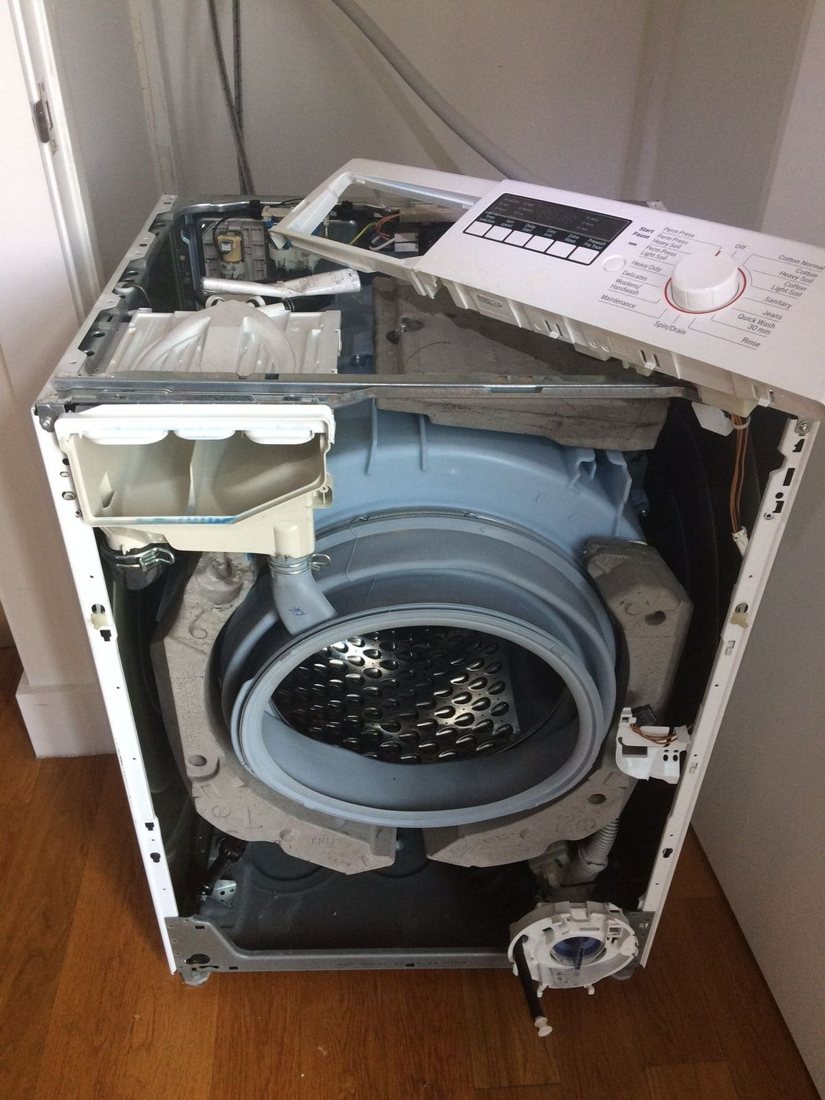
Front loaders depend on a sealed horizontal drum, controlled water level and a door that remains locked while the drum can contain water. Their faults often interact: poor drainage can prevent spinning, a worn bearing can damage the seal, and excessive movement can stress wiring or hoses. Diagnosis must therefore follow the cycle sequence rather than treating each symptom in isolation.
1. Door Interlock And Strike
We examine the door interlock and strike in relation to the reported fault and the machine’s operating sequence. The check is intended to confirm whether this area is functioning, obstructed, worn, incorrectly installed or receiving the wrong electrical or control input. Findings from this step are compared with the other symptoms before any repair recommendation is made.
2. Bellows Seal And Retaining Band
We examine the bellows seal and retaining band in relation to the reported fault and the machine’s operating sequence. The check is intended to confirm whether this area is functioning, obstructed, worn, incorrectly installed or receiving the wrong electrical or control input. Findings from this step are compared with the other symptoms before any repair recommendation is made.
3. Pressure Chamber And Level Sensor
We examine the pressure chamber and level sensor in relation to the reported fault and the machine’s operating sequence. The check is intended to confirm whether this area is functioning, obstructed, worn, incorrectly installed or receiving the wrong electrical or control input. Findings from this step are compared with the other symptoms before any repair recommendation is made.
4. Sump Hose And Coin Trap
We examine the sump hose and coin trap in relation to the reported fault and the machine’s operating sequence. The check is intended to confirm whether this area is functioning, obstructed, worn, incorrectly installed or receiving the wrong electrical or control input. Findings from this step are compared with the other symptoms before any repair recommendation is made.
5. Drain Pump Impeller
We examine the drain pump impeller in relation to the reported fault and the machine’s operating sequence. The check is intended to confirm whether this area is functioning, obstructed, worn, incorrectly installed or receiving the wrong electrical or control input. Findings from this step are compared with the other symptoms before any repair recommendation is made.
6. Motor Brushes Or Inverter Drive
We examine the motor brushes or inverter drive in relation to the reported fault and the machine’s operating sequence. The check is intended to confirm whether this area is functioning, obstructed, worn, incorrectly installed or receiving the wrong electrical or control input. Findings from this step are compared with the other symptoms before any repair recommendation is made.
7. Counterweights And Shock Absorbers
We examine the counterweights and shock absorbers in relation to the reported fault and the machine’s operating sequence. The check is intended to confirm whether this area is functioning, obstructed, worn, incorrectly installed or receiving the wrong electrical or control input. Findings from this step are compared with the other symptoms before any repair recommendation is made.
8. Drum Spider And Bearing Assembly
We examine the drum spider and bearing assembly in relation to the reported fault and the machine’s operating sequence. The check is intended to confirm whether this area is functioning, obstructed, worn, incorrectly installed or receiving the wrong electrical or control input. Findings from this step are compared with the other symptoms before any repair recommendation is made.